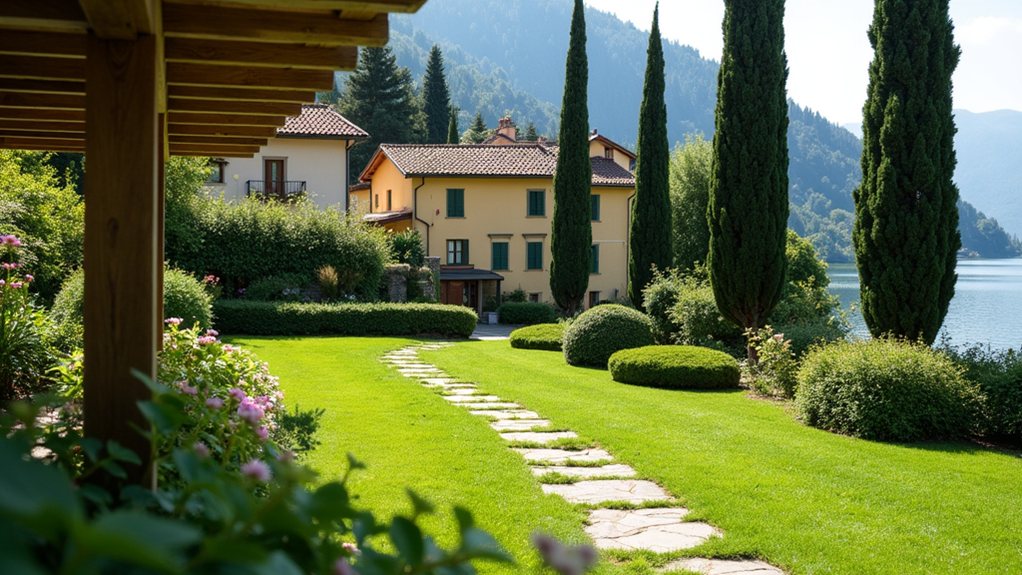
Although many dream of transforming their outdoor spaces into relaxing havens, adding a pergola or gazebo in Lake Como isn’t as simple as picking a spot and setting up shop. In this breathtaking region, property owners must navigate a maze of local regulations before installing any garden structures. The vision of sipping lemonade beneath a stylish pergola might be appealing, but it’s important to guarantee compliance with municipal regulations to avoid hefty fines or the disappointment of having to dismantle a newly built structure.
Dreaming of a pergola in Lake Como? First, be sure to navigate local rules before making your garden oasis a reality.
Lake Como’s municipalities consider garden structures like pergolas and gazebos as “open structures,” meaning they don’t create new enclosed volumes and are treated much like outdoor furniture. This classification is good news for property owners, as it often simplifies the regulatory process—at least a little bit.
However, before anyone grabs a hammer or calls in a contractor, it’s imperative to understand which building permits or notifications are required. For example, if a pergola or gazebo is no larger than 9 square meters, no notification is necessary. It’s almost as if the authorities are saying, “Go ahead, we trust your sense of style—just keep it modest!”
Once a structure exceeds that size, specifically ranging between 9 square meters and up to 20% of the gross floor area of the property, a more formal notification is needed. This comes in the form of a SCIA or CILA, which are types of administrative notifications that keep the local government in the loop about changes to the property. These requirements are designed to make sure that garden structures not only look lovely but also respect neighbors, property lines, and the unique charm of Lake Como communities.
The rules don’t stop at size. The type of enclosure matters, too. Removable side closures, like rolling shades or transparent panels, do not automatically turn a pergola into a permanent structure. Yet, once permanent fixed screens are added, the simple definition of an open structure no longer applies, and building permits become necessary. This detail is essential for property owners dreaming of a cozy, rain-proof retreat.
Ultimately, consulting the local technical office is a wise move. Each municipality may have its own twist on the regulations, so a quick chat with the experts can save time, money, and headaches. With a little planning and respect for the rules, Lake Como’s residents can enjoy their garden structures—legally and beautifully. Additionally, understanding local property laws is crucial for ensuring compliance and avoiding potential pitfalls.